
Office Lighting Design: Complete Illumination Guide

Office Lighting Design Guide — AI Associates

Quick answer

How many lux do you need for office lighting?

General office work requires 300-500 lux, detailed tasks like reading or data entry need 500-750 lux, and very detailed work such as design needs 750-1,000 lux. Meeting rooms need 300-500 lux, while corridors require only 100-150 lux.

Key Takeaways

  • Effective office lighting layers ambient, task, and accent lighting, targeting 300-500 lux for general work.
  • LED lighting uses 75% less energy than incandescent and lasts over 50,000 hours.
  • Circadian-tuned lighting adds a 15-30% premium but often returns its investment within two years through productivity.

Light: The Most Underestimated Office Design Element

Poor lighting is silent productivity killer affecting every employee daily yet rarely receiving serious design attention until problems surface: eye strain and headaches, afternoon energy crashes, screen glare frustration, video conferencing lighting disasters, and mood impacts (particularly in windowless spaces). Research consistently shows lighting profoundly affects cognitive performance, energy levels, mood and wellbeing, sleep quality, and error rates. Yet many offices accept inadequate lighting, treating it as functional necessity rather than strategic design element. After designing lighting for 500+ offices across Asia, we’ve learned what separates spaces where people thrive from those where they struggle. Excellent lighting doesn’t require massive budgets—it requires understanding principles and systematic application. This comprehensive guide provides framework for designing office lighting supporting health, productivity, and visual comfort.

Understanding Light Measurement & Requirements

Key Concepts: Lux (lx): Light intensity measurement. One lux = one lumen per square meter. Office Lighting Standards: - General office work: 300-500 lux - Detailed work (reading, data entry): 500-750 lux - Very detailed work (design, drafting): 750-1,000 lux - Meeting rooms: 300-500 lux - Corridors: 100-150 lux Color Temperature (Kelvin): - Warm white: 2700-3000K (cozy, residential feel) - Neutral white: 3500-4500K (balanced, versatile) - Cool white: 5000-6500K (energizing, clinical) Color Rendering Index (CRI): Measures how accurately colors appear. Office lighting should be CRI 80+ (90+ for design/creative work).

The Three Lighting Layers

Effective office lighting combines three distinct layers:
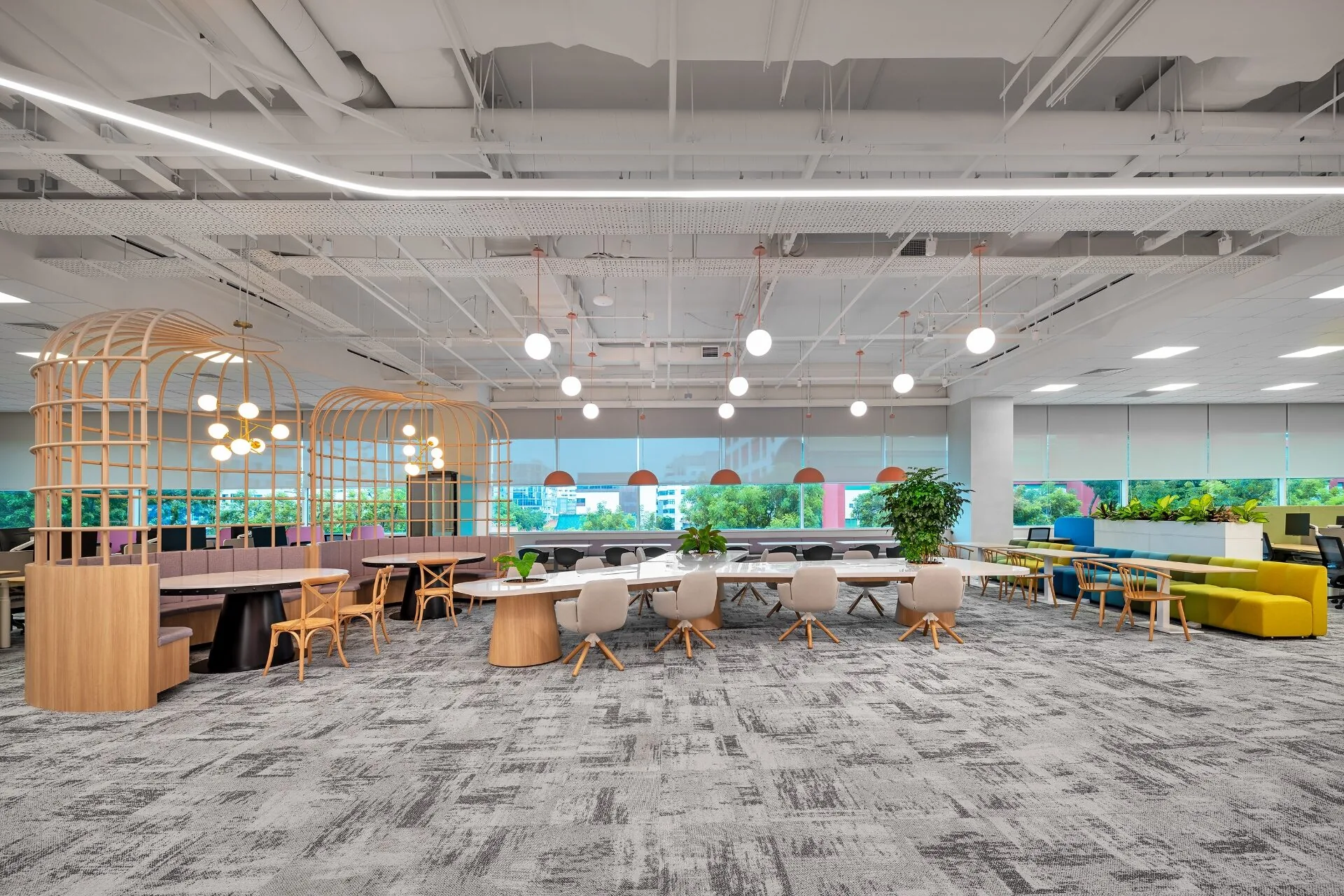
  1. Ambient Lighting (General Illumination): Base layer providing overall visibility throughout space. Sources include ceiling fixtures (recessed, surface-mounted, suspended), indirect lighting (uplighting from fixtures), and natural daylight contribution.
Target: 300-500 lux uniform throughout workspace.
  1. Task Lighting (Focused Work Illumination): Supplemental lighting at workstations for detailed tasks. Sources include desk lamps, under-cabinet lighting, and monitor backlights.
Target: Additional 200-500 lux on work surface, bringing total to 500-750 lux for detailed work.
  1. Accent Lighting (Visual Interest): Highlighting architectural features, artwork, or creating ambiance. Not functional necessity but enhances aesthetic quality and wayfinding.
Natural Light: Foundation of Great Lighting

Daylight offers unmatched benefits: full spectrum supporting circadian rhythms, dynamic quality changing throughout day, views reducing stress, and energy savings. Maximizing Daylight: Window Placement Strategy: - Position workstations near windows (within 7-8 meters for daylight benefit) - Use daylight deeper into space through: - Light shelves reflecting daylight to ceiling - Clerestory windows allowing deep penetration - Glass partitions transmitting light between spaces - Skylights where possible Glare Management: Direct sunlight creates computer screen glare and visual discomfort. Control through: - Adjustable blinds or shades - Diffusing films on windows - Workstation orientation (side lighting preferred over front/back) - Light-redirecting louvers Seasonal & Daily Variation: Natural light changes dramatically by time and season. Automated systems adjust artificial lighting maintaining consistent levels.

Artificial Lighting Systems

LED Technology (Current Standard): LEDs dominate modern office lighting due to energy efficiency (75% less energy than incandescent), long lifespan (50,000+ hours), instant on/off, dimmability, and no UV/IR radiation. Fixture Types: Recessed Downlights: Clean aesthetic, good for ambient lighting, 2×2 or 2×4 LED panels common in suspended ceilings. Cost: Rp 500.000-2 juta per fixture Linear Suspended Fixtures: Modern aesthetic, direct/indirect illumination, excellent for open offices. Cost: Rp 2-8 juta per meter depending on quality Track Lighting: Adjustable, accent lighting, feature areas. Cost: Rp 1-4 juta per meter Task Lamps: Individual control, supplemental lighting. Cost: Rp 400.000-3 juta per lamp

Lighting Control & Flexibility

Smart lighting controls dramatically improve energy efficiency and user satisfaction: Occupancy Sensors: Automatically turn off lights in unoccupied areas. Energy savings 20-40%. Cost: Rp 300.000-1 juta per sensor Daylight Sensors: Dim artificial lighting when sufficient natural light available. Energy savings 20-30%. Cost: Rp 800.000-2 juta per sensor/zone Manual Dimming: Individual or zone control allowing preference adjustment. Cost: Rp 200.000-800.000 per dimmer Scene Presets: Pre-programmed lighting levels for different activities (focused work, collaboration, presentation, cleaning). Personal Control: Task lamps providing individual control over immediate environment without affecting others.

Lighting Design by Space Type

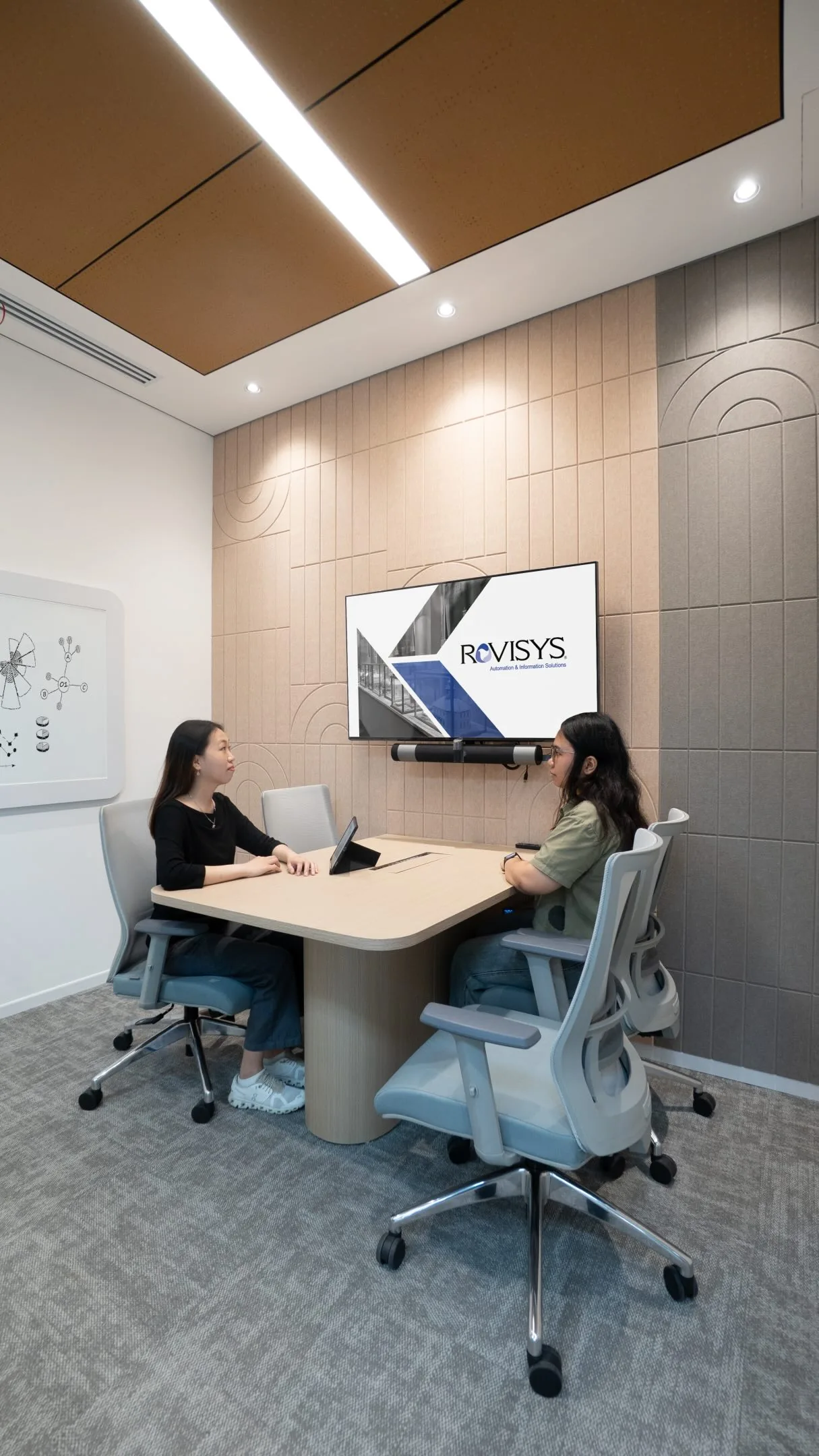
Open Workstations: - Ambient: 400-500 lux from ceiling fixtures - Task: Desk lamps providing additional 200-300 lux - Distribution: Uniform to prevent dark spots - Glare control: Anti-glare lenses on fixtures, proper computer screen positioning Private Offices: - Similar to open workstations but with personal control - Accent lighting options (bookshelf lighting, wall sconces) - Dimmability for video conferences Meeting Rooms: - Dimmable ambient lighting (300-500 lux for meetings, 100-200 lux for presentations) - Separate zone controls (presentation area vs seating area) - No glare on screens/displays - Video conference lighting (front-fill lighting on faces) Break Rooms/Pantries: - Warmer color temperature (3000-3500K) creating relaxed atmosphere - Good task lighting at prep areas - General ambient 300-400 lux Corridors/Circulation: - Lower levels sufficient (100-150 lux) - Uniform distribution for safety - Occupancy sensors for energy savings Reception/Entry: - Higher levels (500-750 lux) creating bright, welcoming impression - Accent lighting on branding elements - Balance professional with welcoming

Circadian Lighting & Wellness

Human circadian rhythms respond to light intensity and color temperature. Circadian-tuned lighting systems mimic natural daylight patterns: Morning: Cool white (5000-6500K), higher intensity energizing wakefulness Afternoon: Neutral white (4000-4500K), sustained attention Evening: Warm white (3000-3500K), preparing for day end Benefits include improved alertness and cognitive performance, better mood and wellbeing, enhanced sleep quality after work, and reduced afternoon energy dips. Implementation cost: 15-30% premium over standard systems but ROI through productivity gains often under 2 years.

Budget Guidelines

Basic Office Lighting (per m²): - Budget: Rp 150.000-250.000/m² - Mid-range: Rp 250.000-450.000/m² - Premium: Rp 450.000-800.000/m² 500m² Office Examples: Budget (Rp 75-125 million): Basic LED panels, limited controls, adequate but uninspiring Mid-range (Rp 125-225 million): Quality LED fixtures, occupancy sensors, some daylighting control, good aesthetics Premium (Rp 225-400 million): High-end fixtures, full automated controls, circadian tuning, architectural quality

Common Lighting Mistakes

Mistake #1: Insufficient Light Levels. Dark offices cause eye strain and drowsiness. Measure actual lux levels. Mistake #2: Overlighting. Too much light wastes energy and creates glare/discomfort. Balance is key. Mistake #3: Poor Color Rendering. Low CRI makes colors look washed out affecting mood and work quality (especially design/creative work). Mistake #4: No Individual Control. One-size-fits-all lighting frustrates employees with different preferences/needs. Mistake #5: Neglecting Maintenance. Dirty fixtures or aging bulbs significantly reduce light levels over time. Clean fixtures and replace lamps on schedule. Mistake #6: Ignoring Glare. Computer screen glare is constant irritant. Address through fixture selection and workstation positioning.

Conclusion

Excellent office lighting is achievable at moderate cost through understanding principles, systematic application, and attention to detail. Proper lighting dramatically improves employee experience, productivity, and wellbeing—delivering ROI far exceeding investment. Key principles: layer ambient + task + accent lighting, maximize natural daylight while controlling glare, provide individual control where possible, consider circadian impacts, and maintain systems properly. At AI Associates, lighting design is integrated into overall workplace strategy ensuring illumination supports health, productivity, and aesthetic goals. Contact us for office lighting consultation ensuring your illumination strategy delivers optimal results.

Frequently Asked Questions

How many lux do you need for office lighting?

General office work requires 300-500 lux, detailed tasks like reading or data entry need 500-750 lux, and very detailed work such as design needs 750-1,000 lux. Meeting rooms need 300-500 lux, while corridors require only 100-150 lux.

What are the three layers of office lighting?

Effective office lighting combines three layers: ambient lighting provides general illumination of 300-500 lux throughout the space, task lighting adds 200-500 lux at workstations for detailed work, and accent lighting highlights architectural features or artwork to enhance aesthetics and wayfinding.

What color temperature is best for an office?

Office color temperature depends on the area. Neutral white (3500-4500K) is balanced and versatile for general work. Cool white (5000-6500K) energizes mornings, while warm white (3000-3500K) suits break rooms and evenings. Circadian systems shift temperature throughout the day for wellness.

Follow us on @ai.associates_

A closer look at our work, people, and design process.

Our officesSingapore/Kuala Lumpur/Jakarta
We design and build experiences.
At AI Associates, we turn ideas into thoughtful spaces, driven by strategy and experience. Get in touch with us to begin your design journey.
Singapore
A I Associates Pte Ltd

2 Sims Close #07-02 Gemini @ Sims Singapore. 387298.

T: +65 6659 7688

Malaysia
A.I. Architectural Interior Associates Sdn Bhd.

Unit No. 20-03, Level 20, Menara MBMR, No. 1, Jalan Syed Putra, Kuala Lumpur, 58000, Malaysia.

T: +60 3 2302 2900

Indonesia
PT. Architectural Interiors Indonesia

PIFT 19th floor unit 03, Jl. Lingkar Puri Dalam Blok T-8, Puri Indah, Jakarta Barat, Indonesia. 11610.

T: +6221 2258 5558

Cambodia
AI Associates (Cambodia) Co.,Ltd

No. 724 ECC Building 18th Floor, Norodom Blvd, Sangkat Tonle Basak, Khan Chamkamorn, Phnom Penh, Cambodia.

T: +855 23 230 763

Vietnam
AI Associates Vietnam Company Limited

617 & 617A National Road 13, Town 3, Hiep Binh Phuoc Ward, Thu Duc City, Ho Chi Minh City, Vietnam

China
A I Associates (Shanghai) Co., Ltd

Rm5213, 5th floor, No.656 Guilin Road, Xuhui district Shanghai, China