
Quick answer
What is the most important element of a video conferencing room?
Audio quality is the most important element of a video conferencing room. People tolerate poor video but abandon meetings with bad audio. Crystal-clear audio requires strategic microphone placement, echo cancellation, noise reduction, controlled room acoustics, and properly positioned speakers without distortion.
Key Takeaways
- Audio quality matters most in video conferencing rooms because people tolerate poor video but abandon meetings with bad audio.
- Video conferencing rooms need 800-1,000 lux of lighting, three to five times more than comfortable for humans.
- A professional 6-8 person video conferencing room requires a minimum budget of $10,000-15,000 for reliable performance.
The Hybrid Work Essential That Can’t Fail
Video conferencing transformed from occasional convenience to business-critical infrastructure. Teams collaborate across cities and continents daily. Client meetings happen via screen. Interviews, presentations, and negotiations all depend on reliable video connection. Yet many companies invest thousands in video conferencing equipment only to struggle with poor audio quality, terrible lighting, awkward camera angles, and technical failures during important meetings. The problem isn’t the technology—it’s the room design around it. After designing hundreds of video conferencing spaces across Asia, we’ve learned that successful VC rooms require equal attention to technology, acoustics, lighting, and spatial design. Miss any element and the system underperforms regardless of equipment cost. This comprehensive guide covers everything needed to design video conferencing rooms that work flawlessly, impress clients, and support your hybrid work strategy.Understanding Video Conferencing Room Types
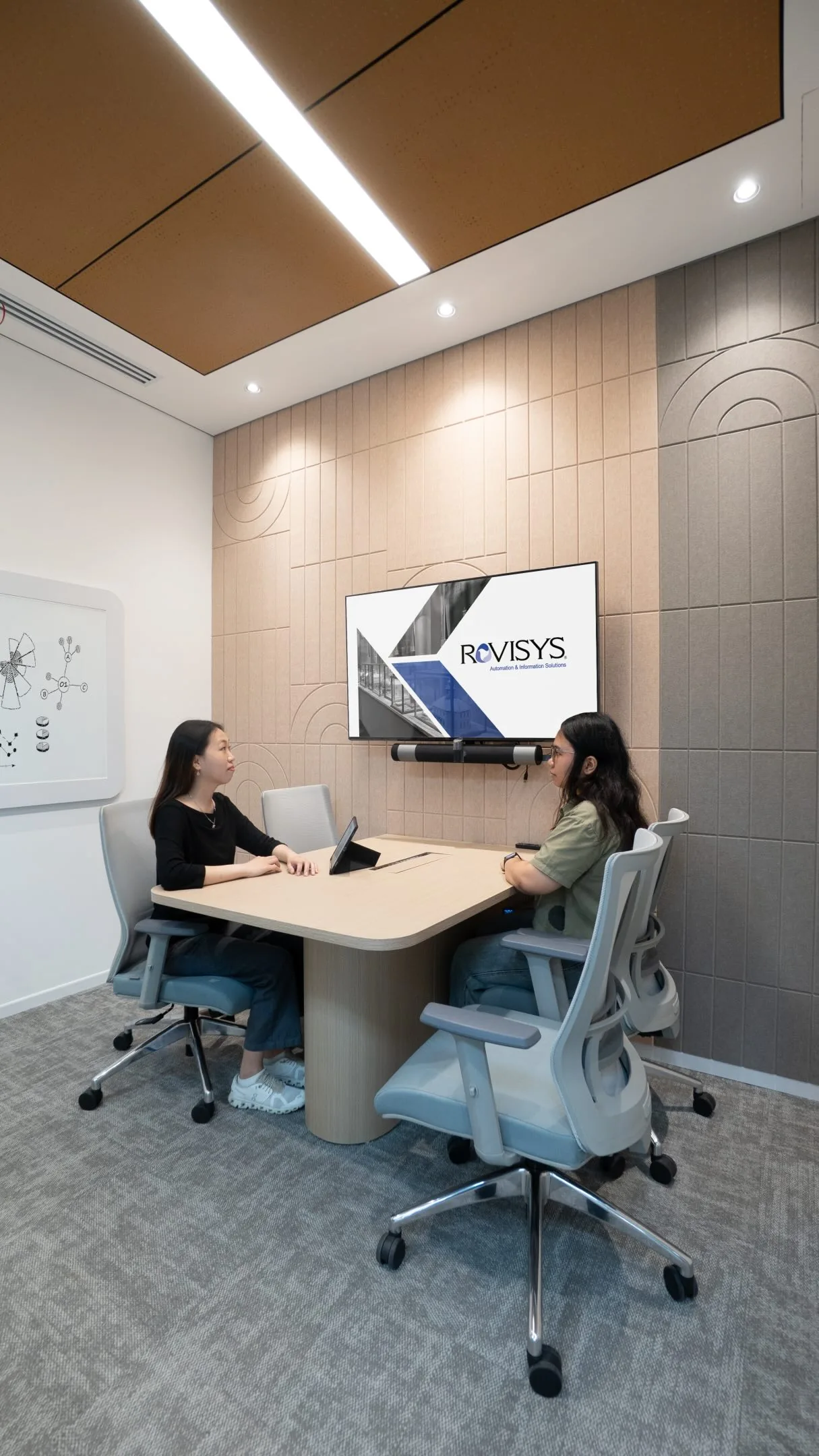
Small Huddle Rooms (2-4 people): Intimate spaces for quick team syncs. Single display (42-55”), soundbar with integrated camera, simple control interface, compact footprint (80-120 sq ft), and wireless content sharing. Investment: $3,000-8,000. Medium Meeting Rooms (6-10 people): Standard conference room with VC capability. Single or dual displays (55-75”), separate camera and audio, room control system, proper acoustics, standard conference table, and wired/wireless connectivity. Investment: $8,000-20,000. Large Boardrooms (10-20 people): Executive-level spaces with premium systems. Large display or video wall (75-98”), PTZ (pan-tilt-zoom) cameras, ceiling microphones, DSP audio processing, advanced control systems, and sophisticated acoustics. Investment: $20,000-60,000+. All-Hands/Town Hall Spaces (20-100+ people): Auditorium-style with broadcast quality. Multiple displays, professional cameras, advanced audio systems, video switching, recording capability, and streaming infrastructure. Investment: $60,000-200,000+.The Four Critical Elements
- Audio Quality (Most Important): People tolerate poor video but abandon meetings with bad audio. Crystal-clear audio requires proper microphone placement (ceiling or table mics positioned strategically), echo cancellation (DSP processing preventing feedback), noise reduction (filtering HVAC and ambient sounds), room acoustics (controlling reverberation), and appropriate speaker placement (clear without distortion).
- Video Quality: Professional video presence requires camera positioning (eye-level placement, not looking up/down), appropriate field of view (capturing all participants without excessive space), lighting integration (camera sees what we don’t notice), resolution and frame rate (1080p minimum, 4K for boardrooms), and background considerations (what remote participants see).
- Lighting Design: Cameras need abundant light—far more than comfortable for humans. Proper lighting includes ambient lighting (800-1,000 lux minimum), facial lighting (eliminate shadows), color temperature (consistent 4000-5000K), glare elimination (no bright backgrounds or windows behind participants), and dimmable controls (adjusting for natural light changes).
- Room Acoustics: Sound quality depends on room design including reverberation control (RT60 under 0.6 seconds ideal), sound isolation (preventing external noise intrusion), acoustic treatment (ceiling tiles, wall panels, carpet), furniture absorption (fabric chairs, soft surfaces), and HVAC noise control (quiet systems, duct silencing).