

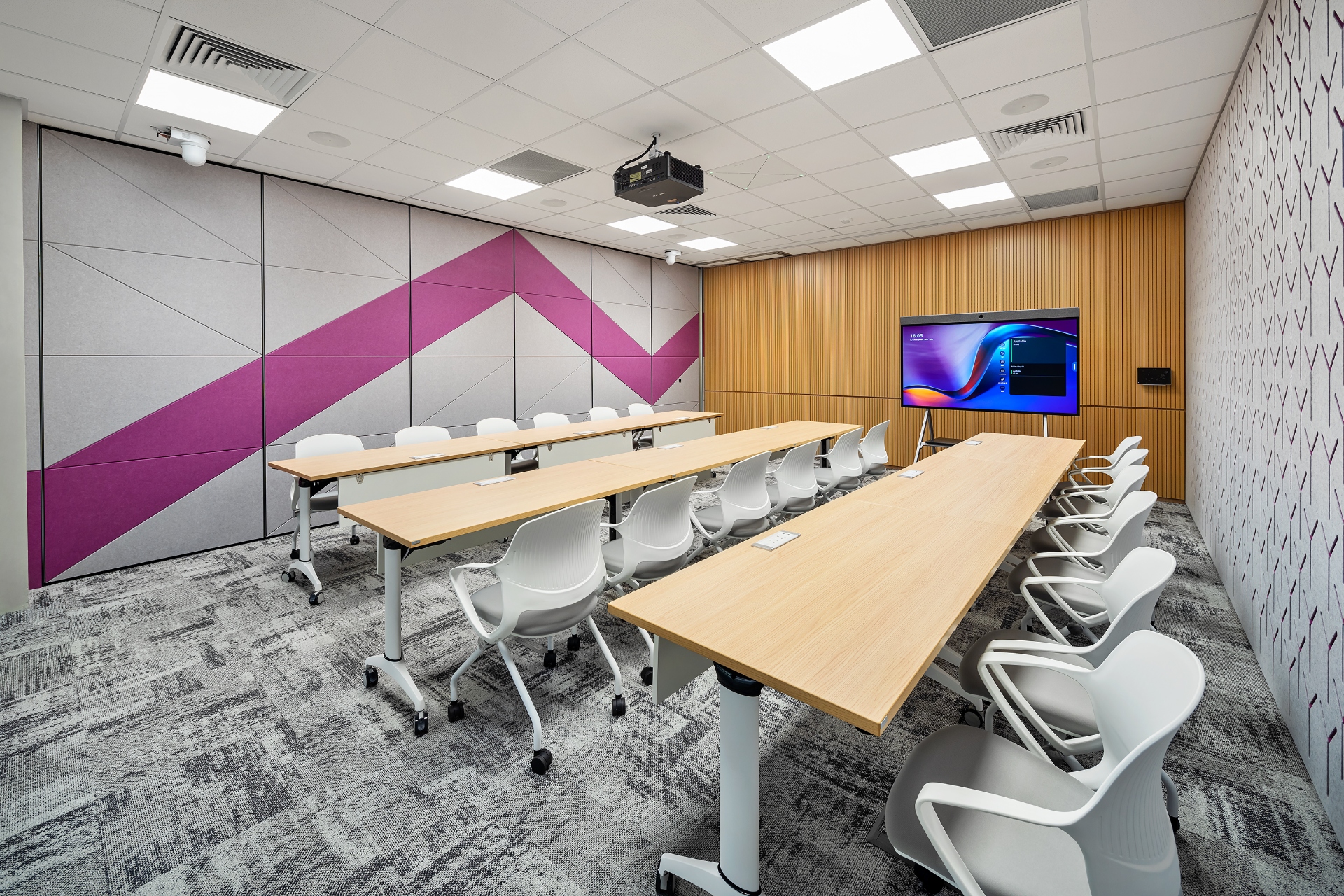
Hot Desking: The Workspace Revolution
Hot desking—the practice of unassigned seating where employees choose available desks daily rather than having permanently assigned workstations—has evolved from radical concept to mainstream workplace strategy.
Pre-pandemic, hot desking was niche approach primarily used by coworking spaces and highly mobile workforces. Post-pandemic hybrid work explosion made hot desking relevant to far broader range of companies seeking to optimize space utilization as employees split time between office and remote work.
Yet hot desking remains controversial: some companies swear by space savings and flexibility while others report employee dissatisfaction and implementation challenges.
After helping dozens of organizations across Asia implement (and in some cases, reverse) hot desking programs, we've learned what works, what doesn't, and how to determine if it's appropriate for your company.
This comprehensive guide provides framework for understanding hot desking and making informed decision about implementation.
What Exactly is Hot Desking?
Definition: Hot desking (also called desk hoteling, flexible seating, or unassigned seating) is workspace model where employees do not have permanently assigned desks. Instead, they choose from available workstations when they arrive each day.
Key Characteristics:
- No personal desk ownership
- First-come, first-served or reservation-based desk selection
- Ratio of desks to employees typically 0.6-0.8 (fewer desks than employees)
- Personal belongings stored in lockers rather than at desks
- Clean desk policy (clear everything at end of day)
- Hot desking: First-come, first-served, no advance booking
- Desk hoteling: Advance reservation system, book specific desk/time
- Traditional: 100 desks × 10m² per person = 1,000m² × SGD 80/m²/month = SGD 80,000 monthly
- Hot desking: 70 desks × 10m² = 700m² × SGD 80/m²/month = SGD 56,000 monthly
- Savings: SGD 24,000 monthly = SGD 288,000 annually
- Focus rooms for quiet work
- Collaboration areas for teamwork
- Phone booths for calls
- Social areas for breaks
- Maximum booking duration (e.g., consecutive days)
- No-show policies (auto-release if not checked in)
- Cancellation requirements
- Team booking procedures
- "Camping" (leaving items to claim desk)
- Blocking multiple desks
- Hogging favorite spots
- Ignoring booking system
- Headphones for calls/music
- Moderate noise levels
- Clean up after yourself
- Don't disturb others' focus
- Lockers: Rp 80-150 million (100 employees)
- Technology standardization: Rp 100-200 million
- Booking system: Rp 40-100 million (3-year subscription)
- Total one-time: Rp 220-450 million
- Booking system: Rp 40-80 million annually
- Increased cleaning (daily wipe-downs): Rp 20-40 million annually
- Desk utilization rates (target: 70-85%)
- Space cost per employee (reduction achieved?)
- Booking system usage (are people using it?)
- No-show rates (booking but not showing up)
- Employee satisfaction surveys (before/after comparison)
- Exit interview mentions
- Recruitment feedback (positive or negative?)
- Productivity assessments
- Utilization under 60% (too many desks)
- Utilization over 90% (too few desks, constant competition)
- Declining satisfaction scores
- Territorial behavior emerging
- Teams fragmenting
- Employees already working hybrid/remote significantly
- Mobile workforce (travel, client sites)
- Technology-forward culture
- Willingness to invest in proper implementation
- Space costs substantial
- Forced onto unwilling employees for cost-cutting
- Traditional corporate culture
- Deep focus work requiring personalization
- Teams need constant face-to-face collaboration
- Inadequate investment in supporting infrastructure


