Activity-based working (ABW) provides a range of settings, focus, collaboration, meeting, social and quiet, that employees choose based on the task rather than using one assigned desk. Designed well, with legible settings, good acoustics and supportive technology and policy, ABW improves choice and space efficiency. Designed poorly, it frustrates users.
Key takeaways
- ABW replaces assigned desks with a choice of task-based settings.
- Success depends on legible settings, acoustics, technology and policy.
- It can improve space efficiency and employee choice.
- Poorly supported ABW frustrates people and fails to deliver.
- Change management is as important as the design itself.
What activity-based working is
In activity-based working, people do not have a fixed desk. Instead they move between settings designed for different tasks: focused work, collaboration, meetings, calls, social interaction and quiet concentration. The idea is that no single setting suits every task, so a range serves people better and uses space more efficiently.
Settings and space ratios
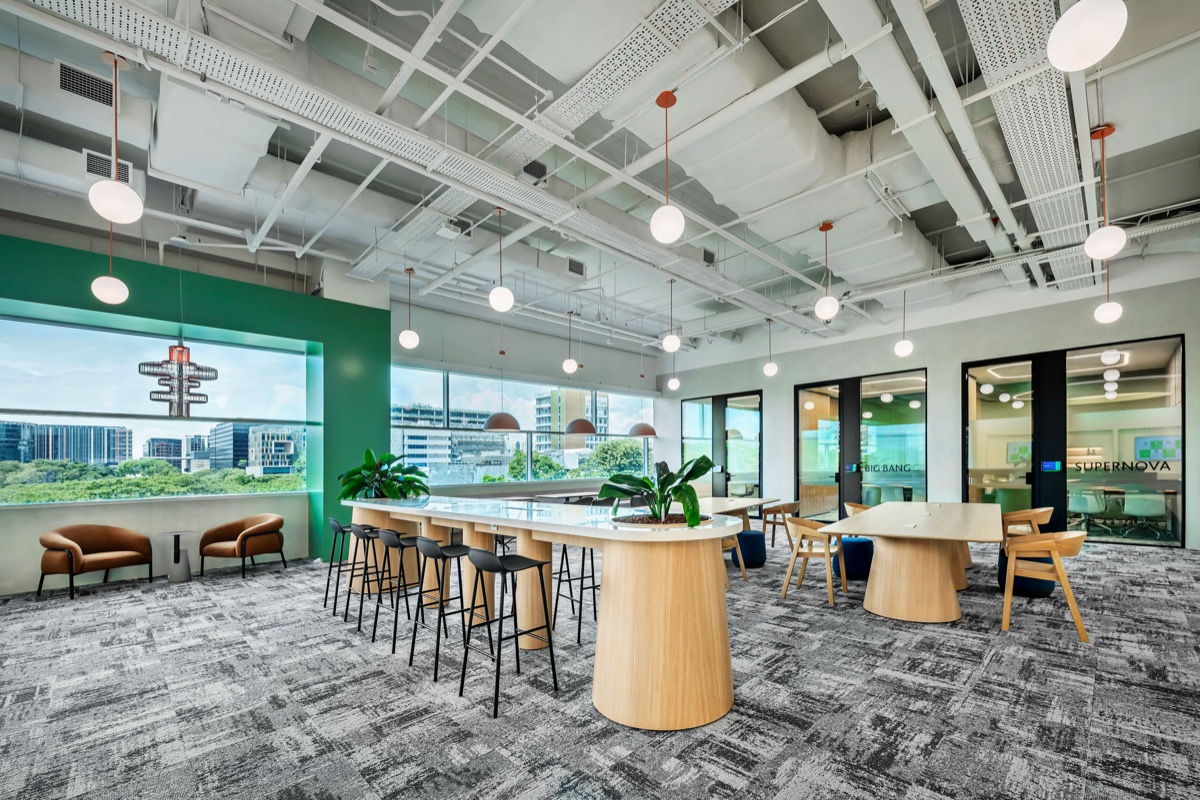
A good ABW environment provides a balanced mix: enough focus points and quiet rooms, varied collaboration settings, bookable meeting rooms by size, and social space. Ratios depend on attendance and work style rather than a fixed formula. The common failure is too few focus and quiet settings, which drives people away from the office.
Pros and cons
The benefits are choice, better support for varied tasks, and more efficient use of space under hybrid attendance. The risks are insufficient quiet space, storage and locker shortfalls, technology friction, and resistance if people lose a desk without gaining clear value. ABW rewards careful provision and honest planning.
What makes ABW succeed
Success needs more than furniture: clear settings, strong acoustics, seamless technology, adequate storage, sensible etiquette, and genuine change management so people understand and trust the model. Involve staff early. For planning, see our consultancy and change management guide.
Frequently asked questions
What is activity-based working?
Activity-based working provides a range of settings for different tasks, focus, collaboration, meeting, social and quiet, that employees choose based on what they are doing, rather than having one assigned desk. It aims to support varied work and use space more efficiently.
What are the pros and cons of activity-based working?
The pros are choice, better support for varied tasks and efficient space use under hybrid attendance. The cons are the risk of too few quiet settings, storage shortfalls, technology friction and staff resistance if the change is not well supported.
What space ratios does ABW need?
There is no fixed formula; ratios depend on attendance and work style. A balanced mix of focus points, quiet rooms, varied collaboration settings, bookable meeting rooms and social space is essential. The common mistake is providing too few focus and quiet settings.
Why does activity-based working sometimes fail?
Usually because of insufficient quiet and focus space, storage and locker shortfalls, technology friction, or weak change management. When people lose an assigned desk without gaining clear value and good settings, they resist and the model underperforms.
Is activity-based working suitable for every company?
No. It suits organisations with varied tasks, mobile work and supportive culture, backed by good design and change management. Teams needing constant fixed setups, heavy equipment or high confidentiality may need a more enclosed or assigned approach.