AI is changing office design by speeding up analysis, generating layout and design options, and helping interpret workplace data. It is a powerful aid for exploring possibilities and testing scenarios, but human judgment, context and experience remain essential for briefing, compliance, buildability and the decisions that make a workplace actually work.
Key takeaways
- AI accelerates analysis and option generation in design.
- Data tools help interpret how space is really used.
- AI supports exploration but does not replace judgment.
- Briefing, compliance and buildability still need experienced people.
- The value is better decisions, not automation for its own sake.
Where AI helps in office design
AI and data tools can rapidly analyse requirements, generate and compare layout options, test scenarios against headcount and attendance, and surface patterns in how space is used. This speeds up early exploration and lets teams consider more possibilities than manual methods allow, which can lead to better-informed decisions.
Data-driven space planning
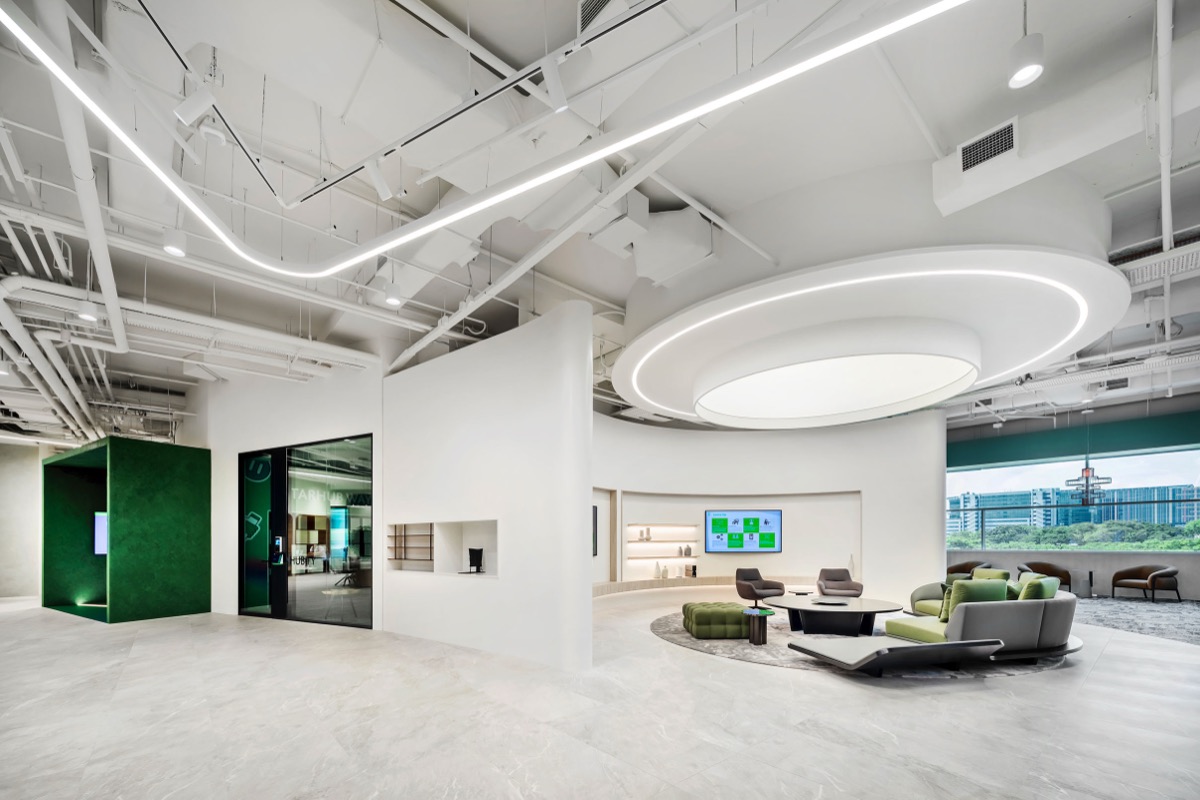
Workplace data, from occupancy sensors to utilisation studies, helps ground design in evidence rather than assumption. AI can help interpret this data to inform desk ratios, settings and amenity provision. Used well, it reduces guesswork and supports layouts that match real behaviour, especially under hybrid attendance.
Where human judgment remains essential
Design is not only optimisation. Understanding a business, shaping a brief, meeting codes, ensuring buildability, resolving trade-offs and creating a space that feels right all depend on experience and context. AI can inform these, but the accountable decisions, and the responsibility for a working result, remain human.
Using AI well
Treat AI as a tool that augments a skilled team, not a replacement for it. Use it to explore options and interpret data faster, then apply judgment to decide. For related topics, see our smart office design guide and consultancy.
Frequently asked questions
How is AI used in office design?
AI helps analyse requirements, generate and compare layout options, test scenarios against headcount and attendance, and interpret workplace data. It accelerates early exploration and lets teams consider more possibilities, supporting better-informed design decisions.
Can AI replace an interior designer?
No. AI is a powerful aid for exploring options and interpreting data, but understanding a business, shaping a brief, meeting codes, ensuring buildability and creating a space that feels right depend on human experience and judgment. The accountable decisions remain human.
How does data improve space planning?
Workplace data such as occupancy and utilisation grounds design in evidence rather than assumption. It helps inform desk ratios, settings and amenity provision, reducing guesswork and supporting layouts that match how people really use space, especially under hybrid attendance.
Is AI reliable for workplace design decisions?
AI is reliable for accelerating analysis and generating options, but its outputs need expert review. Context, compliance, buildability and business judgment require experienced people. The best results come from AI augmenting a skilled team, not making decisions on its own.
What is the real benefit of AI in design?
Better decisions, not automation for its own sake. By speeding up analysis and option generation and helping interpret data, AI lets teams explore more and ground choices in evidence. Human judgment then turns that into a workplace that actually works.