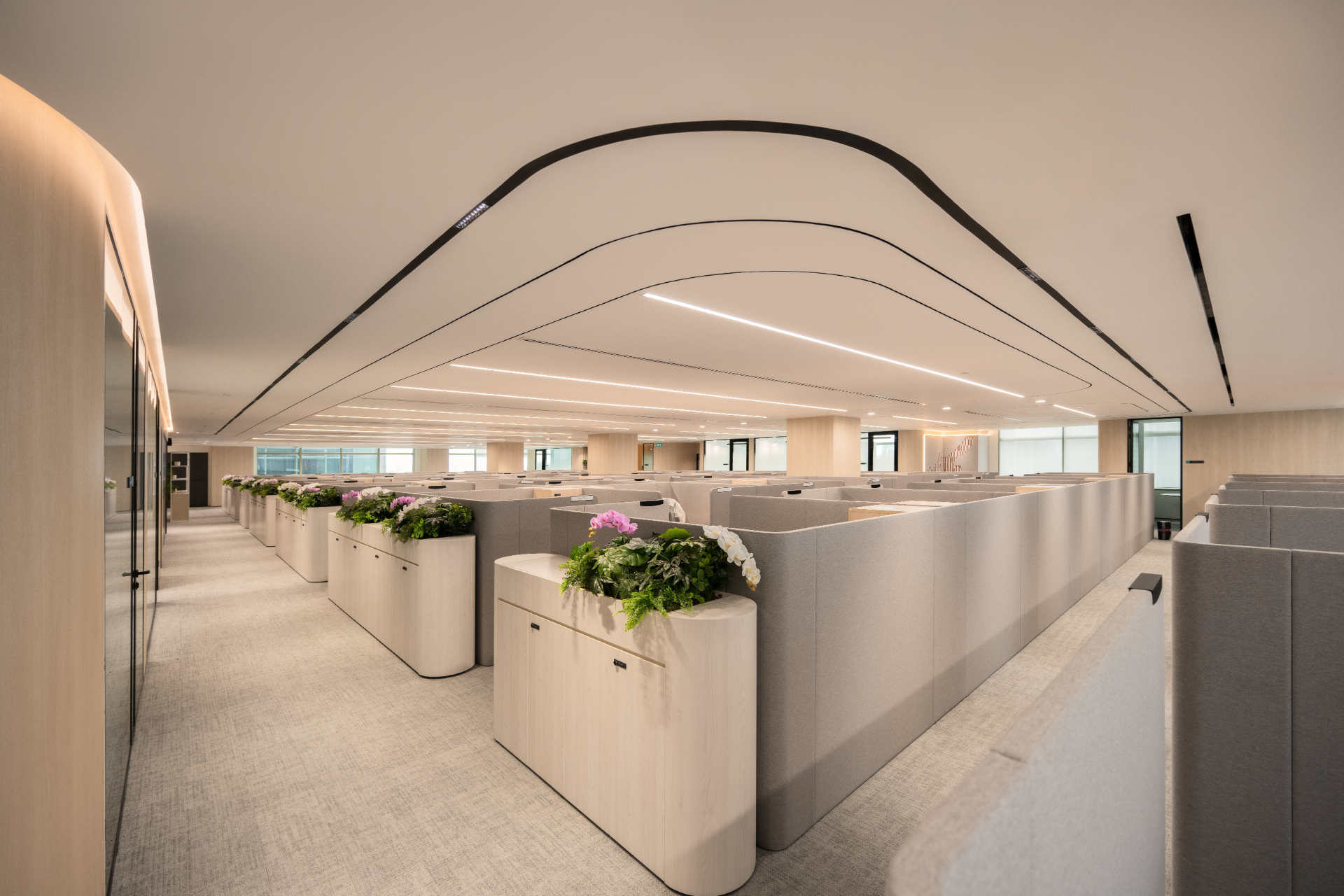
Minimalist office interior design uses a restrained palette, clean lines and careful planning to create calm, focused workplaces. Done well it improves clarity and maintenance and can control cost, but it requires discipline in storage, cable management and detailing so the result feels considered rather than empty or cold.
Key takeaways
- Minimalism is discipline and clarity, not emptiness.
- Hidden storage and cable management are what keep it clean.
- A restrained palette can lower cost and simplify maintenance.
- Detailing and quality matter more when there is less to look at.
- Add warmth through texture and light so it does not feel cold.
Planning a minimalist layout
Minimalist planning starts with clarity: clean circulation, uncluttered sightlines and a calm sense of order. The discipline is in what you hide. Generous, well-placed storage and tidy cable management are essential, because visible clutter destroys a minimalist scheme faster than any material choice.
Materials and palette
Use a restrained palette of a few quality materials and let texture and light add interest. With less to look at, every junction and finish is more visible, so detailing quality matters more, not less. Introduce warmth through timber, textile or planting so the space feels human rather than clinical.
Cost: where minimalism saves and where it does not
A simpler palette and fewer bespoke elements can reduce cost and speed procurement. But minimalism is not automatically cheap: clean results demand precise detailing, good storage and careful finishing, which require skill. Budget for quality where it shows, and save by reducing variety rather than cutting craft.
Keeping it functional
A minimalist office must still support real work: enough meeting and focus settings, acoustic comfort and practical storage. Avoid stripping function in the name of style. The goal is calm and clarity that help people concentrate. For planning help, see our consultancy service.
Frequently asked questions
What is minimalist office design?
Minimalist office design uses a restrained palette, clean lines and careful planning to create calm, focused workplaces. It emphasises clarity and order, relying on hidden storage, tidy cable management and quality detailing rather than decorative elements.
Is minimalist office design cheaper?
It can be, because a simpler palette and fewer bespoke elements reduce cost and speed procurement. But minimalism is not automatically cheap; clean results need precise detailing and good storage. Save by reducing variety, not by cutting craft.
How do I stop a minimalist office feeling cold?
Add warmth through natural textures such as timber and textile, introduce planting, and use good lighting. With a restrained palette these elements carry more weight, creating a calm but human space rather than a clinical one.
What is the key to a successful minimalist office?
Discipline in hiding clutter. Generous storage and tidy cable management keep sightlines clean, which is what makes minimalism work. Visible clutter undermines the scheme faster than any single material or colour choice.
Does minimalism work for every office?
It suits businesses that value calm, focus and a clear brand, but it demands tidiness and good storage to maintain. Teams with heavy physical materials or storage needs require careful planning so minimalism remains practical day to day.